
Emergency Tarping: A Temporary Solution for Roof Damage
When a storm rolls through Central Florida, it can leave your roof damaged and vulnerable. Whether it’s missing shingles, punctures from fallen branches, or cracks from hail, the clock starts ticking the moment your roof loses its protective barrier.
Emergency tarping acts as a stopgap, keeping rain and debris out while you arrange for permanent repairs. It’s not a fix, but it buys you time and prevents a bad situation from getting worse.
Key Takeaways
- Emergency tarping protects your home from water damage after storms or unexpected roof failure.
- A properly installed tarp can last several weeks to months, depending on weather conditions.
- Tarping should only be done by professionals to avoid safety risks and ensure proper coverage.
- Temporary tarps prevent mold growth, structural damage, and interior destruction while repairs are scheduled.
- This solution works for both residential and commercial properties across Central Florida.
Why Emergency Tarping Matters
Roof damage doesn’t wait for convenient timing. A compromised roof exposes your home’s interior to rain, wind, and pests within hours.
Water seeps into insulation, drywall, and framing, creating problems that spread fast. Mold starts growing in 24 to 48 hours in humid Florida conditions.
Emergency tarping creates a waterproof barrier over the damaged area. It stops the immediate threat while giving you breathing room to assess the situation, file insurance claims, and schedule a contractor. For homeowners dealing with hurricane roof damage, tarping is the first line of defense.
When You Need Emergency Tarping
Not every roof issue requires a tarp, but certain situations demand fast action:
- Missing or torn shingles that leave the underlayment exposed
- Punctures from tree limbs or fallen debris during storms
- Cracked or lifted tiles on older roofs that let moisture penetrate
- Fire or vandalism damage that compromises the roof structure
You’ll also need tarping if you discover a leaky roof but can’t schedule repairs immediately. Contractors often have waiting lists after major storms, and tarping prevents ongoing damage while you wait.
How Emergency Tarping Works
Professional roofers follow a specific process to ensure proper protection:
1. Damage Assessment
Roofers inspect the entire affected area to identify all compromised sections. They measure the damage to determine the right tarp size and materials needed.
2. Tarp Installation
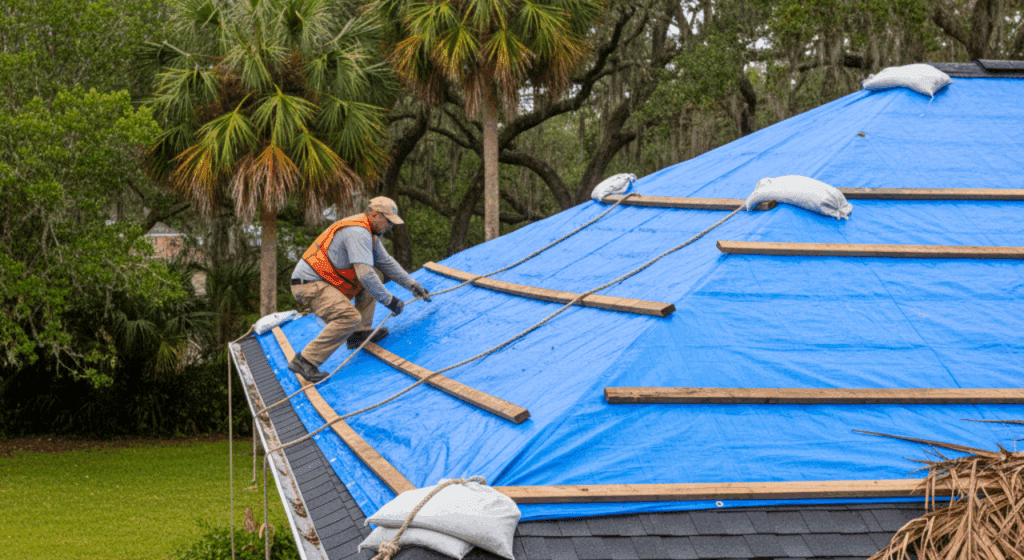
Heavy-duty polyethylene or vinyl tarps get secured over the damage. The tarp extends beyond the damaged area on all sides, creating an overlap that channels water away from vulnerable spots.
3. Proper Anchoring
Tarps get anchored using wood battens or anchor boards fastened to the roof deck. The boards sandwich the tarp edges, distributing tension evenly and preventing wind from ripping the material loose. Roofers avoid nails or screws that penetrate the roof unnecessarily, which would create new leak points.
Proper installation means the tarp lies flat without wrinkles or gaps where water can pool.
What Emergency Tarping Protects
A well-installed tarp shields your home from multiple threats. Water damage tops the list, as even small leaks can ruin ceilings, walls, and floors.
Beyond water, tarps keep out animals and pests looking for entry points. It also prevents debris like leaves, branches, and dirt from accumulating inside your home.
Temporary vs. Permanent Solutions
Emergency tarping isn’t meant to last forever. It’s a Band-Aid, not a cure.
Most tarps hold up for several weeks to a few months, depending on weather exposure and installation quality. Over time, UV rays degrade the material, wind loosens fasteners, and repeated rain weakens the seal.
Permanent repairs require replacing damaged shingles, tiles, or metal panels with new materials. Addressing common roof damage properly ensures your home stays protected for years, not just weeks.
Safety Considerations
Climbing on a damaged roof is dangerous without proper equipment and training. Wet or unstable surfaces increase the risk of falls, and damaged sections may not support your weight.
Professional roofers have the experience and tools to work safely at heights. Attempting to tarp your own roof can result in injury, inadequate protection, or voided insurance claims.
Insurance and Documentation
Most homeowners’ insurance policies cover emergency tarping as part of storm damage mitigation. Insurers expect you to take reasonable steps to prevent further damage after an incident occurs.
Before tarping begins:
- Take photos and videos of the damage from multiple angles
- Document the full extent of what’s affected
- Note the date and time of the damage
After installation:
- Photograph the tarp installation to prove that protective measures were taken
- Keep all receipts and invoices from the roofing company
- File your claim promptly with complete documentation
This documentation supports your insurance claim and helps speed up the approval process.
Common Mistakes to Avoid
Using tarps that are too small leaves vulnerable areas exposed. The tarp needs to extend well beyond the damaged section, with enough overlap to direct water away from the roof deck.
Another mistake is securing tarps with tape, rope, or bungee cords instead of proper anchoring. These methods fail quickly under wind pressure, causing the tarp to flap, tear, or blow off entirely.
You also want to avoid placing tarps directly over roofing issues without addressing underlying problems like rotted decking or saturated insulation. The tarp keeps new water out, but it won’t fix damage that’s already occurred.
How Long Does Tarping Last?
Lifespan varies based on tarp quality, installation technique, and weather conditions. In ideal circumstances, a properly installed tarp can last three to six months. Florida’s intense sun and frequent storms often reduce that window to a few weeks or a couple of months.
Regular inspections help catch problems early. Check the tarp after storms to make sure it’s still secure and intact. If you notice any issues, contact your roofer immediately.
Get Professional Help
If your roof has sustained damage, don’t wait for the problem to worsen. Wescon Construction offers emergency tarping services throughout Central Florida, protecting homes in Brevard, Orange, Volusia, Seminole, and Osceola counties.
Contact them for a free estimate and protect your home today.
Conclusion
Emergency tarping provides critical protection when your roof is compromised. It stops water intrusion, blocks pests, and gives you time to plan permanent repairs.
While tarping is temporary, it’s an essential step in protecting your investment. When you need to find a roof leak or fix a roof leak, professional tarping keeps your home safe until the work gets done.
Need Expert Advice on Your Roofing Project? Contact us today!
Get A Free Estimate
"*" indicates required fields
