
How to Find Stubborn Roof Leaks
Water dripping from your ceiling doesn’t always mean the leak is directly above. In fact, water can travel several feet through your roof layers before showing up in your living space, making some roof leaks frustratingly difficult to track down. The key to stopping the damage lies in understanding how water moves through your home’s structure and knowing where to look for the real source.
Key Takeaways
- Water doesn’t always drip straight down through a roof, often traveling horizontally before appearing in your ceiling.
- Attic access makes leak detection much easier, but safety precautions are essential before investigating.
- Professional roofers have specialized tools and experience to find leaks that homeowners might miss.
- False leaks from condensation or plumbing issues can mimic roof problems and waste repair efforts.
- Common leak sources include damaged flashing, missing shingles, and improperly sealed roof penetrations.
Why Roof Leaks Are So Hard to Find
When water enters your roof, it doesn’t follow a predictable path. Instead of flowing straight down like you’d expect, water moves along roof decking, rafters, and insulation until it finds an exit point.
This might be through a light fixture, around a pipe, or through a soffit vent. By the time you see water damage in your home, the actual entry point could be many feet away from where you’re standing.
Water follows the path of least resistance. Your roof’s structure creates channels and barriers that redirect water flow, which is why finding a stubborn leaky roof requires methodical investigation rather than guesswork.
Immediate Steps to Take
Before you start hunting for the source, focus on damage control:
- Place buckets under any active drips
- Move furniture, electronics, and valuables away from the affected area
- If dripping noise bothers you, place a small piece of wood in the bucket
Important safety note: Don’t attempt to puncture your ceiling to release pooled water without professional guidance. You can’t know how much water has accumulated above or whether the ceiling structure can handle the sudden release.
Water-damaged ceilings can collapse unexpectedly, so avoid walking directly under the affected area until a professional assesses the situation.
Related: Maximize Roof Longevity – Here’s How!
Rule Out False Leaks First
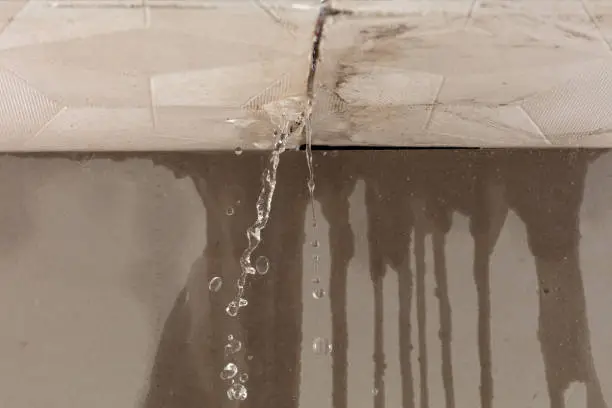
Not all ceiling water damage comes from roof leaks. Poor attic ventilation can create condensation problems that mimic leak symptoms, including water stains, mold growth, and dripping.
Plumbing leaks above the ceiling can also appear to be coming from the roof. These false leaks can lead to expensive and unnecessary roof repairs.
Look for patterns in when the “leak” appears. If water damage occurs during dry weather or seems connected to shower use or other indoor activities, you might be dealing with a ventilation or plumbing issue instead of actual roof damage.
Method 1: Attic Investigation
Safety Preparation
Before entering your attic, check what type of insulation you have:
- Fiberglass insulation – Safe to work around with proper protection
- Asbestos insulation – Requires professional handling (never enter)
- Blown-in cellulose – Generally safe but wear protective gear
Essential safety gear includes gloves, eye protection, and a dust mask. Bring a reliable flashlight and be mindful of where you step. Walk only on ceiling joists, never on insulation or drywall between joists.
If the leak has been active for a while, consider whether water damage might have weakened the ceiling structure.
What to Look For
Start your search directly above the visible leak in your ceiling, but don’t stop there. Water often travels before dropping through your ceiling.
Primary moisture indicators:
- Dark stains or spots on wood framing or insulation
- Mold growth and musty odors
- Condensation on metal surfaces like nails or brackets
- Damaged insulation with holes, compression, or discoloration
Fresh water damage appears darker and may feel damp to the touch. Older damage creates permanent staining that can help you track the leak’s history.
Using Light for Detection
Your flashlight can reveal problems invisible under normal lighting. Shine it on suspected areas from different angles to spot shiny or unusually dark spots.
Try the daylight test by turning off all artificial lights in the attic. Look for bright spots coming through the roof structure that shouldn’t be there. Any light penetration (except through proper vents) represents a potential water entry point during storms.
Related: Roof Replacement Vs Roof Restoration – Best Option For You
Method 2: When Attic Access Isn’t Possible
Many newer homes have sealed attic spaces or cathedral ceilings that prevent direct inspection. In these situations, you’ll need professional help to identify leak sources from the roof surface.
Professional roofers know where leaks commonly develop and have specialized tools like moisture meters and thermal imaging cameras. They can safely navigate roof surfaces and identify issues that aren’t visible from inside your home.
This is where Wescon Construction’s years of experience become invaluable. Our team has seen every type of leak scenario and knows exactly where to look.
Top 6 Common Leak Sources
Understanding where leaks typically develop can help focus your search efforts:
1. Damaged or Missing Shingles
Storm damage, improper installation, or normal aging can compromise individual shingles. Even small cracks or curled edges can allow water penetration during heavy rain.
2. Flashing Problems
This metal material seals joints around chimneys, vents, and skylights. When flashing becomes loose, corroded, or improperly installed, water slips through these vulnerable areas.
3. Valley Issues
Areas where two roof slopes meet are particularly vulnerable to common roof damages. These high-water-flow zones must be properly sealed and regularly maintained.
4. Roof Penetrations
Vents, pipes, and mounting hardware create potential weak spots. Deteriorated sealing materials around these features frequently cause persistent roofing issues.
5. Chimney Problems
Complete chimney waterproofing involves multiple types of flashing. Problems here often lead to hurricane roof damage during severe weather events.
6. Gutter Backup
While clogged gutters rarely cause direct leaks, water overflow can worsen existing roof vulnerabilities and create ice dam problems in winter.
When to Call the Professionals
You should contact a roofing contractor immediately if you notice:
- Multiple leak locations
- Signs of structural damage
- Electrical hazards near water
- Mold growth or strong musty odors
- Leaks that return after attempted repairs
At Wescon Construction, we’ve built our reputation on reliability and thorough leak detection. Our experienced team knows how to fix a roof leak properly the first time, saving you money and frustration.
We offer affordable solutions backed by years of experience and excellent customer reviews. Don’t let a small leak turn into major structural damage.
Ready to Stop That Leak for Good?
Don’t let water damage destroy your home’s value and your peace of mind. Wescon Construction’s experienced team knows how to locate even the most elusive leaks and provide lasting solutions.
Contact us today for a free estimate and put an end to your roof leak problems once and for all.
Conclusion
Finding stubborn roof leaks requires patience, safety awareness, and often professional expertise. While homeowners can take immediate protective steps and perform basic attic investigations, the complexity of modern roofing systems means that persistent leaks usually need professional attention.
Remember that water damage compounds quickly, so don’t delay addressing leak problems. Whether you find a roof leak yourself or need professional help, taking action promptly will save you money and protect your home’s structural integrity.
With the right approach and experienced professionals like Wescon Construction, even the most stubborn roof leaks can be found and fixed permanently.
Need Expert Advice on Your Roofing Project? Contact us today!
Get A Free Estimate
"*" indicates required fields
