How to Spot Roof Water Damage Before It Becomes a Major Problem
Water damage is one of the most destructive forces your roof can face. A small leak might seem harmless at first, but if you don’t catch it early, it can lead to structural problems, mold growth, and expensive repairs. The good news is that roofs usually give you warning signs before things get out of control. If you know what to look for, you can address issues early and save yourself a lot of trouble down the road.
Key Takeaways
- Water stains on ceilings or walls often point to active roof leaks that need immediate attention
- Damaged or missing shingles create entry points for water and should be replaced quickly
- Sagging areas in your roof deck indicate trapped moisture and potential structural damage
- Mold or mildew growth inside your home signals ongoing moisture problems from the roof
- Regular roof inspections help catch small issues before they become costly repairs
Check Your Ceilings and Walls for Water Stains
One of the first places water damage shows up is inside your house. Brown or yellow stains on your ceilings or walls, especially near corners or under the roofline, are clear warning signs. These discolorations mean water has already penetrated your roof and is working its way through the structure.
Don’t ignore small stains. Water tends to travel along beams and insulation before it becomes visible, so by the time you see it, the leak may have been active for a while.
Inspect Your Roof for Missing or Damaged Shingles
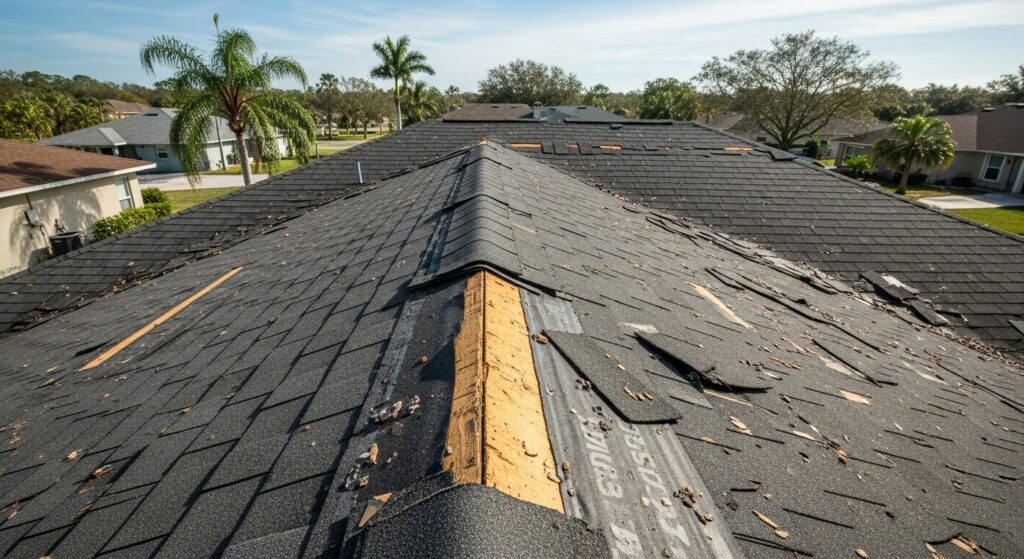
Shingles act as the roof’s shield against moisture. If they’re broken, lifted, or gone entirely, water can slip beneath and harm the layers below. Once heavy winds or storms pass, take a moment to walk around your home and check the roof from the ground.
Here’s what to watch for:
- Shingles that are curled at the edges or buckled in the middle
- Dark spots or discoloration that suggest granule loss
- Shingles that are visibly cracked or broken
If you spot these issues, it’s time to schedule roof repair in Florida before the next rainstorm makes things worse. Damaged shingles won’t protect your home the way they should, and delaying repairs only increases the risk of interior water damage.
Look for Sagging Spots in Your Roof Deck
A sagging roof deck is a serious red flag. If you notice any areas of your roof that look uneven or droopy, it usually means water has soaked into the wood underneath and caused it to weaken.
You might also notice:
- Visible dips or soft spots when walking on the roof (if it’s safe to do so)
- A wavy appearance along the roofline
- Cracked or split wood in the attic
Sagging is often a sign that water has been accumulating for some time, so it’s critical to address it quickly.
Pay Attention to Mold and Mildew Growth
Mold and mildew thrive in damp environments, and a leaky roof creates the perfect conditions for them to grow. If you start smelling a musty odor in your attic or notice dark spots spreading across your ceiling, walls, or insulation, you’re likely dealing with moisture infiltration from above.
Understanding the signs of water damage caused by a leaky roof can help you identify problems before they escalate. Mold isn’t just a cosmetic issue. It can affect your home’s air quality and pose health risks to your family, especially anyone with respiratory conditions or allergies.
Don’t Overlook Exterior Warning Signs
Sometimes the easiest way to spot water damage is by checking the outside of your home. Gutters that are overflowing or pulling away from the roofline can cause water to back up and seep under your shingles.
Take a close look at:
- Fascia boards that are rotting or discolored
- Peeling paint near the roofline
- Algae or moss growth on shingles, which indicates trapped moisture
Keeping your gutters clean and properly aligned is a simple way to prevent water from pooling on your roof.
Schedule Regular Roof Inspections
Even if you don’t see obvious damage, having a professional inspect your roof annually is smart. Experts know what are the signs of a water leak on the roof and can spot issues that aren’t visible from the ground.
Why Regular Inspections Matter
- Catch small problems early. A professional can identify minor issues like loose flashing or worn sealant before they turn into major leaks.
- Extend your roof’s lifespan. Addressing wear and tear promptly keeps your roof in good shape longer, delaying the need for residential roof replacements in Melbourne.
- Avoid surprise expenses. Finding problems during an inspection beats dealing with emergency repairs after a major storm.
Professional roof inspections in central Florida are especially important if your home is exposed to harsh weather or if your roof is over 15 years old.
Understand the Types of Water Damage Your Roof May Face
Not all water damage looks the same, and understanding water damage on your roof types and solutions can help you respond appropriately. Some leaks are slow and hidden, while others are sudden and obvious.
Ice dams, though less common in Florida, can cause water to back up under shingles during rare cold snaps. Wind-driven rain can force water through tiny gaps in flashing or vents. Each situation requires a different approach, so having a professional assess the damage ensures you get the right fix.
Take Action Before It’s Too Late
Catching water damage early can save you thousands of dollars and a lot of stress. If you’ve noticed any of the warning signs mentioned here, don’t wait for the problem to get worse.
Wescon Construction has been helping Central Florida homeowners with roof repairs, replacements, and inspections for over 25 years. Reach out for a free estimate and let the pros take a look.
Protect Your Home with Routine Care
Your roof works hard to keep your home safe and dry, but it can’t do that job forever without maintenance. By staying alert to early warning signs and scheduling regular inspections, you can catch water damage before it spirals out of control.
Need Expert Advice on Your Roofing Project? Contact us today!
Get A Free Estimate
"*" indicates required fields
